Blog

  • Sea of Galilee

    Sea of Galilee

    Kinneret: Sea of Galilee

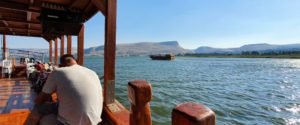
    The beautiful and pastoral Sea of Galilee with its majestic dates & palm groves, and fed by the Jordan River, is a favorite among Holy Land pilgrims. Jesus settled here in the Jewish fishing town of Capernaum after leaving Nazareth.

    Sea of Galilee
    Sea of Galilee

    Soulful sea…
    Ahh, yes, the Sea of Galilee… You may have sailed the “Seven Seas”, but if you haven’t sailed on the Sea of Galilee… What can I say- this one’s got SOUL brother! No wonder so many miracles happened in this spot and that it’s a favorite, not only among millions of pilgrims, but with locals too- finding in this place where G-d speaks, peace, tranquility, and inspiration.

    Kinneret or Sea of the Harp
    Actually, in Hebrew, the language of Scripture, the lake is called the “Sea of Kinneret”, which means “Sea of the Harp”. Look at the map on the blog site and you’ll see that it indeed has the shape of a harp, which is a reminder of the Harp of David. Indeed, according to biblical tradition the Messiah will come out of the House of David. No wonder, in the New Testament, Jesus leaves his hometown of Nazareth and comes down to the Sea of Galilee, where he spends the last three years of his life: He settles in the ancient lakeside Jewish town of Capernaum where he centers his public ministry as a roaming rabbi – teacher – miracle-worker.

    Jordan River
    The Sea of Galilee is a actually a freshwater lake, fed by the Jordan River on the northern end. The lake is bigger than most people imagine: 25 km X 15 km (~15 X 7 miles) and 50 meters (~150 feet) deep. It’s part of the Great Rift Valley extending from Turkey to East Africa and is about 200 meters (over 600 feet) below sea level. No wonder it’s so warm, lush, and brimming with tropical and subtropical vegetation: Bananas, Mango, Avocado, Bougainvillea.

    Dates & Date Palms
    At the southern end of the Sea of Galilee, where the Jordan River flows out of the lake and winds its way south to the Dead Sea, are beautiful date palm groves, famous since Bible times. The dates were brought to the Holy Temple in Jerusalem as a First Fruits offering and are today exported all over the world.

    Sail on the Sea of Galilee
    I invite you to join me in discovering the delight of the Sea of Galilee. Together we’ll set set sail aboard one of the wooden boats pictured on this page, cut the motor, and just listen to the silence, the wind, and gentle lapping of the water. Reflecting on the meaning of this very special place, that has little changed since Bible times, you may find yourself breaking out your Bible, singing a hymn, and even kicking up your heels in joy!
  • Abraham Overlook

    Abraham Overlook

    Abraham & Isaac Overlook

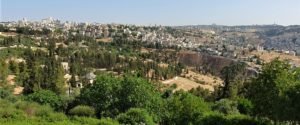
    Imagine opening the Bible here in Israel and standing at the very place where a biblical event unfolded! Today we are at the Abraham & Isaac Overlook in Jerusalem. Here Abraham and Isaac first beheld Moriah – place of the Sacrifice or Binding of Isaac, following a three day journey from Beersheba. Later King Solomon built Solomon’s Temple on Mount Moriah itself.

    Jerusalem panorama
    Jerusalem panorama

    View of Moriah 
    This particular spot on the southern end of Jerusalem is called by locals the Tayelet, which means in Hebrew “promenade”. I like to call it the Abraham and Isaac Overlook overlook since it’s where they beheld Jerusalem and Mount Moriah some 4000 years ago! I’ve been bringing groups here for years- to read and reflect on Abraham’s journey with Isaac from Beersheba, where they lived, to this very spot. God had called Abraham to sacrifice his son Isaac and with a heavy but obedient heart sets out on the three day journey, without of course letting Isaac in on the details of exactly what was happening.

    Beersheba to Moriah
    Here is what the Bible says: “Some time later God tested Abraham. He said to him, Abraham! Here I am, he replied. Then God said, Take your son, your only son, whom you love—Isaac—and go to the region of Moriah. Sacrifice him there as a burnt offering on a mountain I will show you. Early the next morning Abraham got up and loaded his donkey. He took with him two of his servants and his son Isaac. When he had cut enough wood for the burnt offering, he set out for the place God had told him about. On the third day Abraham looked up and saw the place in the distance.” (Gen. 22:1-4)

    Where is the lamb?
    Upon arrival here, at this southern overlook of Jerusalem, Abraham leaves his servants behind to keep an eye on the camp, while he continues with Isaac on into Jerusalem itself and on up Mount Moriah. He tells them that he was going “yonder” with Isaac to worship and would be back soon. It’s about a 45 minute brisk walk from where we are standing at the Abraham & Isaac overlook to Moriah. On the way Abe & Isaac obviously had time to talk a bit. Isaac, who was younger, stronger, and therefore carrying the wood for the sacrifice, gets to thinking. He turns to his father, saying, hey dad, haven’t we forgotten something? “Where’s the lamb”? Abraham replies, “God will provide.” The rest is history: The angel stops Abraham’s hand as he raised the knife after binding is son on the altar, indeed providing the lamb:

    Binding of Isaac
    Here is what happens next: “When they reached the place God had told him about, Abraham built an altar there and arranged the wood on it. He bound his son Isaac and laid him on the altar, on top of the wood. Then he reached out his hand and took the knife to slay his son. But the angel of the Lord called out to him from heaven, Abraham! Abraham! Here I am, he replied.Do not lay a hand on the boy, he said. Do not do anything to him. Now I know that you fear God, because you have not withheld from me your son, your only son. (Genesis 22:10-12)

    Abraham takes the ram instead
    Abraham looked up and there in a thicket he saw a ram caught by its horns. He went over and took the ram and sacrificed it as a burnt offering instead of his son.” (Genesis 22:13)

    Solomon’s Temple
    Almost 1,000 years later, King Solomon builds the Jerusalem Temple on the very spot on Mount Moriah: “Then Solomon began to build the temple of the Lord in Jerusalem on Mount Moriah, where the Lord had appeared to his father David. It was on the threshing floor of Araunah the Jebusite, the place provided by David.” (2Chronicles 3:1)