Tag: Jesus

  • Nazareth: What kind of father was Joseph?

    Nazareth: What kind of father was Joseph?

    What kind of father was Joseph and what kind of home did Jesus grow up in?

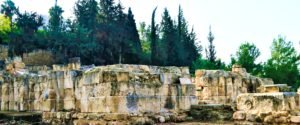
    Mikve, St. Joseph church
    Mikve, St. Joseph church

    To answer this let’s have a closer look at what Joseph did for a living in Nazareth: In Matthew 13:55 we read in reference to Jesus: “Is this not the carpenter’s son?” In Greek the word used (and translated as “carpenter”) is actually “tectonus”, which means “builder”. In other words, Joseph had a building business of sorts, working not only in wood but also in stone. Indeed, building in the Holy Land has always been largely out of stone since wood is scarce (Solomon ordered Cedars from Hiram in Lebanon) and to this day old Nazareth is built out stone. Now, all you guys know that construction is a tough business that can go either way financially, belly up or success if you’re good at what you do.

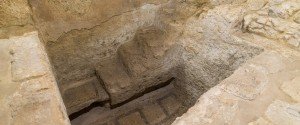
    Mary’s private mikve ritual bath
    Now here’s some ARCHAEOLOGICAL evidence that suggests that Joseph (who we know so little about from the Bible) was indeed quite a successful builder:  That he made a good living, and provided a really nice home for his family.  Above is a photo of a bonafide “mikve” (Jewish ritual bath) taken by a friend of mine, Dr. Tom Winger (whose pastors tour I guided). It was discovered beneath the Church of St. Joseph in Nazareth which is built over the traditional home of Joseph and Mary, where Jesus grew up.

    To be kosher, the MIKVE ritual bath has to be cut out of solid rock (not constructed), hold a minimum of 40 seah (~40 gallons), and be fed by “living water” (non-drawn water) – usually rain water from the roof.  Here’s the thing: Such elaborate Jewish ritual baths are quite expensive and are therefore generally built by a Jewish community at the local synagogue.  Only the wealthy could afford to install a private one in their home.  This is evidenced by a 2000 year old mikve ritual bath we found in a 7,000 square foot Herodian style mansion in Jerusalem from the time of the Temple.

    Biblical home and family life
    So what kind of father was Joseph and what kind of home did Jesus grow up in? Joseph appears to have been quite a guy: The biblical role model of a father and “family man” who worked hard, made a good living, and provided a beautiful home for his wife Mary, who wouldn’t have had to “shlep” to the local synagogue on a cold rainy winter night to use the public mikve ritual bath. This and more… as a successful builder Joseph also had the means, coupled with the right priorities, to provide Jesus with a top notch biblical education: Jesus is called “Rabbi” in the Bible, which means he probably studied in a yeshiva (rabbinical school) but that’s another story.
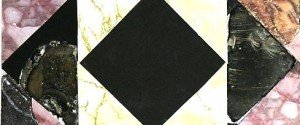
  • Jerusalem: Marble floor tiles from the Holy Temple in Jerusalem (photo Zachi Dvira)

    Jerusalem: Marble floor tiles from the Holy Temple in Jerusalem (photo Zachi Dvira)

    2000 year old marble floor tiles from the Holy Temple on Mount Moriah in Jerusalem brought to light.

    2000 year old marble floor tile from Jewish Holy Temple that stood on Mount Moriah in Jerusalem
    Marble floor tile from Holy Temple Jerusalem (credit Zachi Dvira Temple Mount Sifting Project)

    For the first time in history, actual decorative elements from the Holy Temple in Jerusalem have been brought to light!  Exquisite marble floor tiles, made with meticulously cut stones of different colors – yellow, black, red, purple, white, and more have been recently recovered and pieced together, giving us insight into the great beauty of the Holy Temple of the Jews that stood on Mount Moriah and was destroyed by Titus the Roman in the year 70 AD.  Archaeologists have so far been able to identify seven distinct floor tile patterns.

    2000 year old marble floor tile from Jewish Holy Temple that stood on Mount Moriah in Jerusalem
    Marble floor tile from Holy Temple Jerusalem (credit Zachi Dvira)

    We read about the impressive Temple floor tiles in various literary sources:  Josephus Flavius, the Jewish historian who actually served as a priest in the Jerusalem Temple wrote (Jewish Wars V,5,2), “Open courts were laid with stones of various colors.” In the Babylonian Talmud (Baba Bathra 4a) we read, “It used to be said, He who has not seen the Temple of Herod [in Jerusalem] as never seen a beautiful building. Of what did he build it? Rabbah said: Of yellow and white marble. Some say, of blue, yellow, and white marble.”

    2000 year old marble floor tile from Jewish Holy Temple that stood on Mount Moriah in Jerusalem
    Marble floor tile from Holy Temple Jerusalem (credit Zachi Dvira)

    Hundreds of colorful marble floor tile pieces have been discovered in a major sifting project undertaken by Israel Antiquities authority after Moslem religious authorities on the Temple Mount (where the golden dome Mosque of Omar and El Aksa mosques are located) illegally removed rubble beneath Mount Moriah, without conducting a proper archaeological excavation.  The floor tiles were probably part of the monumental subterranean passageway built by Herod the Great that led up to the Courtyard of the Gentiles on the Temple Mount, and was used by pilgrims – such as Jesus, Mary, & Joseph – when they came to Jerusalem for Passover.

    Visit Israel & see remains of the Holy Temple in Jerusalem
    I invite you to join me here in Israel and  experience a 3-D living color Bible- a blessing without measure! We’ll learn about the Holy Temple that stood on Mount Moriah, visit the Temple Mount excavations, and even help wash the archaeological remains in search of artifacts.
    Shalom! Shalom! Zack Shavin, Jerusalem
  • Emmaus

    Emmaus

    Emmaus Nicopolis

    Leaving Jerusalem, we follow the main road to Emmaus, a biblical Jewish town that became known as Nicopolis in the late Roman Byzantine period. Here passed Joshua, the Maccabees, Crusades, & Jesus who, according to the New Testament Book of Luke, appeared after Calvary and the Resurrection.

    Emmaus Nicopolis: Byzantine & Crusader churches
    Emmaus: Byzantine & Crusader church

    A real biblical place…
    The rich history of Emmaus is marked by the passage of many conquerors and famous people. The Book of Joshua tells how the sun and moon stood still over the adjacent Ayalon Valley when Joshua marched with the Israelites on Gibeon- north of Jerusalem – some 3200 years ago. In 165 BC, Judah Maccabee, one of the important heroes of Hanukkah, won an important victory nearby against the Greek troops of Nicanor. This opened the way to Jerusalem and made it possible for the Jews to purify the Temple which had been desecrated by the Greeks and re-establish the Divine Service, a victory celebrated by the feast of Hannukah every year.

    The place where Jesus broke bread
    By the time of Jesus’ public ministry (~30 AD) Emmaus had become a simple village. It was here, after the Resurrection, that Jesus appears to his disciples, who recognized Him in the breaking of bread (Lk. 24:13-35).

    Byzantine period: Christian pilgrimage
    In the 3rd century AD there was a Christian community in Emmaus and the town was given a new name, Nicopolis or City of Nike – Greek goddess of victory. During the Byzantine period (4-7 centuries) Emmaus Nicopolis became an important Christian administrative center and a basilica to serve Christian pilgrims was built at the traditional site of Jesus’ apparition.

    Crusades
    Byzantine churches which had earlier been destroyed were built by the Crusaders in the 12th century, and subsequently destroyed after the Arab reconquest of the Holy Land. Impressive remains are still visible.

    Modern times
    It was only in 1878, at the initiative of Miriam of Bethlehem, that the Carmelite convent of Bethlehem acquired the site. Since then, it has once again become a place of pilgrimage.

    Excavations
    Excavations in 1880, 1924, and recent years unearthed the remains of two imposing Byzantine basilicas with beautiful mosaics, a baptistery, and the ruins of a Crusader church.

    Gospel according to Luke 24,13-35
    “That very day two of them were going to a village named Emmaus, about a hundred and sixty stadia from Jerusalem, and talking with each other about all these things that had happened. While they were talking and discussing together, Jesus himself drew near and went with them. But their eyes were kept from recognizing him… So he went in to stay with them. When he was at table with them, he took the bread and blessed, and broke it, and gave it to them. And their eyes were opened and they recognized him; and he vanished out of their sight…”

  • Sea of Galilee

    Sea of Galilee

    Kinneret: Sea of Galilee

    The beautiful and pastoral Sea of Galilee with its majestic dates & palm groves, and fed by the Jordan River, is a favorite among Holy Land pilgrims. Jesus settled here in the Jewish fishing town of Capernaum after leaving Nazareth.

    Sea of Galilee
    Sea of Galilee

    Soulful sea…
    Ahh, yes, the Sea of Galilee… You may have sailed the “Seven Seas”, but if you haven’t sailed on the Sea of Galilee… What can I say- this one’s got SOUL brother! No wonder so many miracles happened in this spot and that it’s a favorite, not only among millions of pilgrims, but with locals too- finding in this place where G-d speaks, peace, tranquility, and inspiration.

    Kinneret or Sea of the Harp
    Actually, in Hebrew, the language of Scripture, the lake is called the “Sea of Kinneret”, which means “Sea of the Harp”. Look at the map on the blog site and you’ll see that it indeed has the shape of a harp, which is a reminder of the Harp of David. Indeed, according to biblical tradition the Messiah will come out of the House of David. No wonder, in the New Testament, Jesus leaves his hometown of Nazareth and comes down to the Sea of Galilee, where he spends the last three years of his life: He settles in the ancient lakeside Jewish town of Capernaum where he centers his public ministry as a roaming rabbi – teacher – miracle-worker.

    Jordan River
    The Sea of Galilee is a actually a freshwater lake, fed by the Jordan River on the northern end. The lake is bigger than most people imagine: 25 km X 15 km (~15 X 7 miles) and 50 meters (~150 feet) deep. It’s part of the Great Rift Valley extending from Turkey to East Africa and is about 200 meters (over 600 feet) below sea level. No wonder it’s so warm, lush, and brimming with tropical and subtropical vegetation: Bananas, Mango, Avocado, Bougainvillea.

    Dates & Date Palms
    At the southern end of the Sea of Galilee, where the Jordan River flows out of the lake and winds its way south to the Dead Sea, are beautiful date palm groves, famous since Bible times. The dates were brought to the Holy Temple in Jerusalem as a First Fruits offering and are today exported all over the world.

    Sail on the Sea of Galilee
    I invite you to join me in discovering the delight of the Sea of Galilee. Together we’ll set set sail aboard one of the wooden boats pictured on this page, cut the motor, and just listen to the silence, the wind, and gentle lapping of the water. Reflecting on the meaning of this very special place, that has little changed since Bible times, you may find yourself breaking out your Bible, singing a hymn, and even kicking up your heels in joy!