
Tag: Mount of Olives

  • Rosh Hashana: Why Blow the Shofar?

    Rosh Hashana: Why Blow the Shofar?

    Rosh Hashana, the biblical Jewish New Year is described in the Torah (Lev. 23:24) as a “zikhron teruah”: A time of “blowing [of the shofar] of remembrance”.

    WHAT are we to “remember” and WHY do we blow the Shofar (ram’s horn)?  Rosh Hashana not only marks the biblical New Year and therefore new beginnings, but is also the anniversary of the Creation, culminating in the creation of humankind – Adam & Eve- on the sixth day.  On Rosh Hashana we crown and proclaim God as king of the universe and remind ourselves that the Creation was an act of the purest love, that we are all created equal as beloved children of God, and that we are called to emulate God by going go out into the world and doing acts of loving kindness in our everyday lives – both at home and at work.

    Why do we blow the shofar? 
    The “shofar (ram’s horn) of remembrance” (Lev. 23:24) reminds us of God’s servant Abraham, the depth of his faith with the sacrifice of Issac, and how he took the ram instead when the angel stopped his hand. Abraham was chosen by God not only because of his faith, but more importantly because of his quality of “chesed”- loving kindness towards all human beings, including strangers- and willingness to act on their behalf.  This is demonstrated in the story of Sodom and Gemorrah and how he pleads with God not to destroy the evil pagan inhabitants.

    In closing, may this Rosh Hashana, Day of Remembrance and Jewish New Year, be one of true remembrance of the blowing of the Shofar ram’s horn and even greater resolve to emulate Abraham in spreading peace and loving kindness in our homes, communities, and the world.
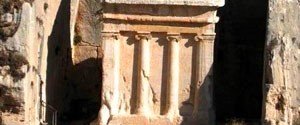
  • Tomb of Zechariah

    Tomb of Zechariah

    Tomb of Zechariah son of Jehoiada…

    Walking in the Kidron Valley at the foot of the Mount of Olives in Jerusalem we come across the monumental rock carved Tomb of Zechariah son of Jehoiada the High Priest.

    Tomb of Zechariah son of Jehoiada the priest in the Kidron Valley, Jerusalem
    Tomb of Zechariah son of Jehoiada the High Priest who served in Solomon’s Temple in Jerusalem

    Zechariah murdered:
    Zechariah the priest, who lived in Jerusalem at the end of the 9th century BC, dared admonish Joash, king of Judah, for being unfaithful to YHWH and allowing Baal worship to be reintroduced into the Holy Temple in Jerusalem.

    Actually, Joash in the early part of his 40 year reign instituted a wide religious reform, ridding the Temple of Baal worship, but later on lapsed into idolatry. Zechariah the priest spoke out against this and was subsequently murdered by stoning in the courtyard of the Temple of Solomon. We read about it in 2 Chronicles 24:21ff:

    Here’s what the Bible’s got  to say:
    “Then the Spirit of God came on Zechariah son of Jehoiada the priest. He stood before the people and said, “This is what God says: ‘Why do you disobey the Lord’s commands? You will not prosper. Because you have forsaken the Lord, he has forsaken you. But they plotted against him, and by order of the king [Joash] they stoned him to death in the courtyard of the Lord’s temple.” 

    Joash had been saved as an infant by Zechariah’s father Jehoiada:
    King Joash apparently did not remember, or did not want to remember, the kindness Zechariah’s father – Jehoiada the High Priest – had shown him when he was an infant: Jehoiada saved Joash from his evil  grandmother, Athaliah, daughter of of Ahab and Jezebel: After her son Ahaziah, king of Judea, was killed at Megiddo, she began killing her dead son’s children to assure her position as ruler over Judea! When Joash turned seven, Jehoiada the High Priest brought him out of hiding as the legitimate heir to the throne, descendant of the House of David, and anointed him king over Judea (see II Chronicles 22:11 & II Chronicles 24:21).

    Egyptian influence
    The the monumental rock carved tomb is from the 2nd century BC and has a pyramid shape, showing Egyptian influence.